Case Study: The Combined Impact of Press Release Distribution and Google Review Growth on Local Search Rankings
Client Industry: California Employment Law Firm | Campaign Date Range: July 11, 2026 – August 15, 2026
Executive Summary
This case study examines the improvement in local search visibility observed after the implementation of a coordinated press release distribution strategy and Google review growth initiative for a California employment law firm. The campaign provides a useful example of how multiple local SEO trust and authority signals can work together rather than relying on a single optimization tactic.
The available ranking data shows substantial improvement across a broad portfolio of employment-law keywords between July 11, 2026 and August 15, 2026, with the most significant gains occurring in the weeks following the July 15 press release distribution. Simultaneously, the firm accumulated six Google reviews over approximately five weeks. The client also reported increased customer contacts during the campaign period.
The evidence supports a strong correlation between these combined activities and measurable improvements in visibility, keyword positioning, and customer inquiries — rather than proof that either tactic independently caused Google's ranking changes.
Key Performance Highlights
Top 1–3 Keywords Growth (55 to 76)
Position Overall Improvement (8.5 to 7.2)
Reduction in Keywords 20+ (25 to 12)
Google Reviews Added (in ~5 weeks)
AI Assistant Key-Event Conversion Rate
Campaign Background
The campaign was conducted for an employment law practice competing for geographically relevant, high-intent searches — terms used by people looking for legal representation, not general information:| Ranking Snapshot Date | Campaign Position |
|---|---|
| July 11, 2026 | Pre-press-release baseline |
| July 18, 2026 | First post-distribution measurement |
| July 25, 2026 | Early post-campaign |
| August 1, 2026 | Continued post-campaign |
| August 8, 2026 | Continued post-campaign |
| August 15, 2026 | Latest measurement |
Visual Proof & Local Performance
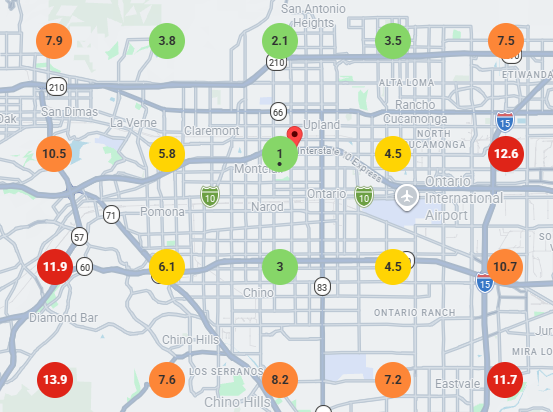
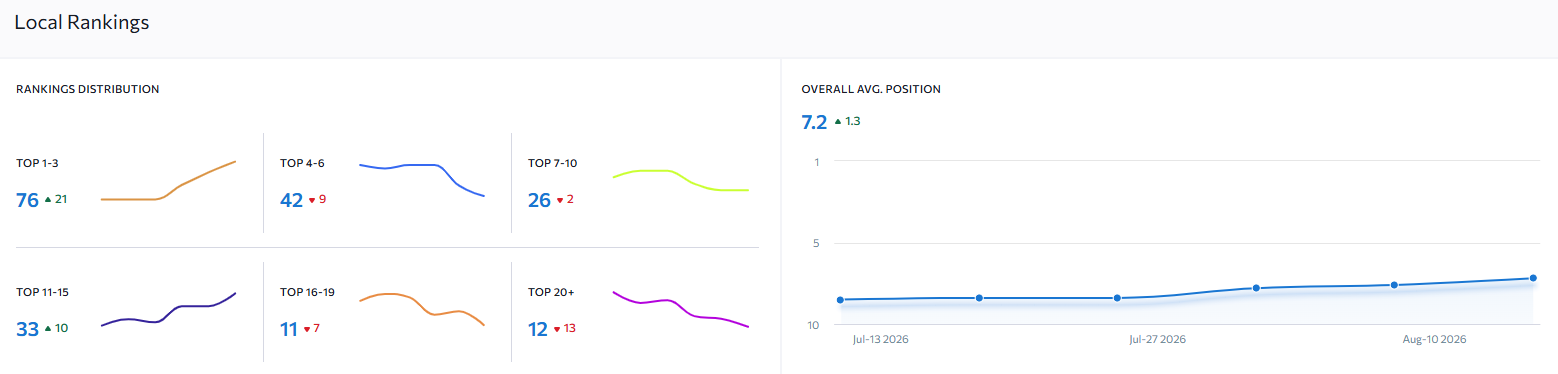
The map illustrates why geography matters for a local firm: proximity to the primary market produces the strongest positions (green, positions 1–5), while rankings gradually weaken further from the core service area (orange/red). This is a normal, expected pattern in local search and confirms the firm has built a meaningful visibility footprint in and around its primary market — a solid foundation for continued local SEO expansion.
Summary of Measurable Results
| Metric | July 11 Baseline | August 15 Latest | Change |
|---|---|---|---|
| Overall Average Position | ~8.5 | 7.2 | +1.3 |
| Top 1–3 Keywords | 55 | 76 | +21 |
| Top 4–6 Keywords | 51 | 42 | -9 |
| Top 7–10 Keywords | 28 | 26 | -2 |
| Top 11–15 Keywords | 23 | 33 | +10 |
| Top 16–19 Keywords | 18 | 11 | -7 |
| Position 20+ Keywords | 25 | 12 | -13 |
| Top 20 Keywords Total | 175 | 188 | +13 |
All figures reflect movement within the same tracked population of approximately 200 keywords — not the addition of new keywords to the tracking project. The decline in the 4–6 and 16–19 bands is a favorable sign here: those keywords didn't disappear, they moved up into stronger positions.
Why the Combination Matters
Press release distribution and Google reviews address two different parts of the local search equation. Neither is presented here as a standalone ranking factor — the strategic value comes from pairing them.Press Release Distribution
Expands the firm's digital footprint and external visibility, contributing to:
- Increased brand exposure
- Greater online entity recognition
- Additional discovery pathways
- Potential secondary mentions and links
- Visibility beyond the firm's own website
Google Reviews
Strengthens local reputation and consumer trust, providing:
- Reputation signals and user-generated content
- Evidence of client activity
- Greater consumer confidence
- Signals tied to the Google Business Profile
- Increased trust when comparing firms
Together: Authority + Reputation + Visibility + Search Presence + User Trust — a more complete local marketing strategy than evaluating either tactic in isolation.
Keyword Group Improvements
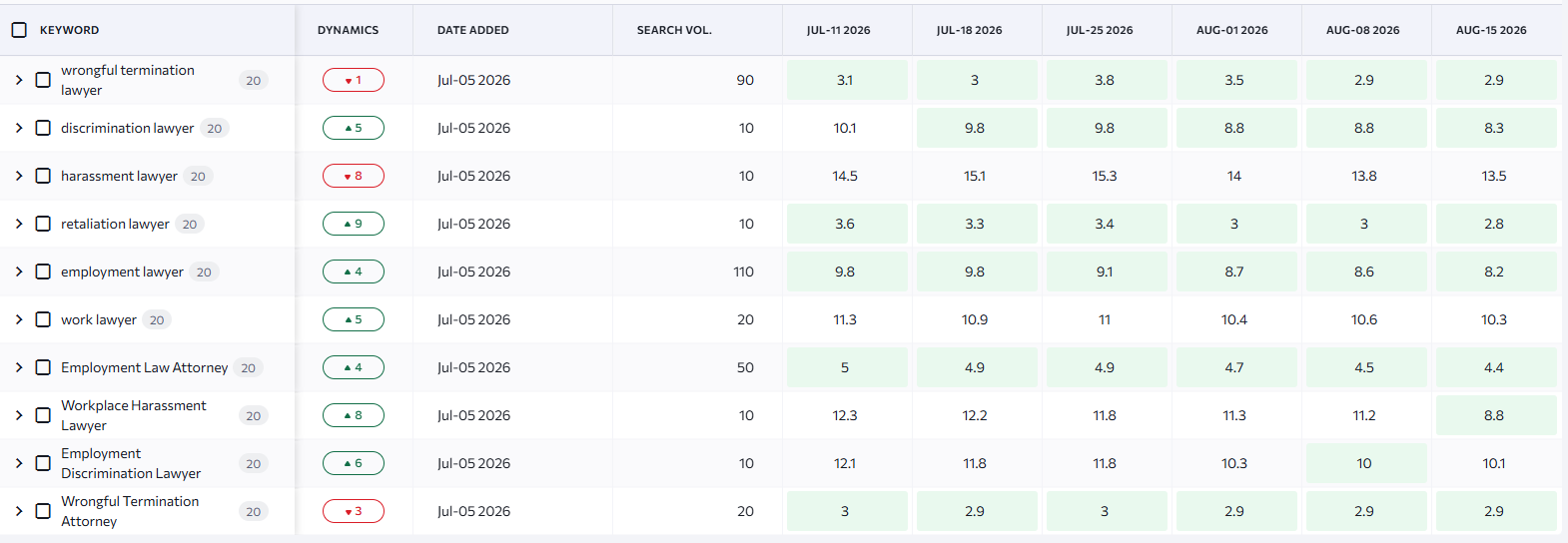
The ranking gains were distributed across multiple high-value practice area searches rather than localized to a single page:| Keyword Category | Baseline Position | August 15 Position | Position Gain |
|---|---|---|---|
| Workplace Harassment Lawyer | 12.3 | 8.8 | +3.5 |
| Employment Discrimination Lawyer | 12.1 | 10.1 | +2.0 |
| Discrimination Lawyer | 10.1 | 8.3 | +1.8 |
| Employment Lawyer | 9.8 | 8.2 | +1.6 |
| Work Lawyer | 11.3 | 10.3 | +1.0 |
| Harassment Lawyer | 14.5 | 13.5 | +1.0 |
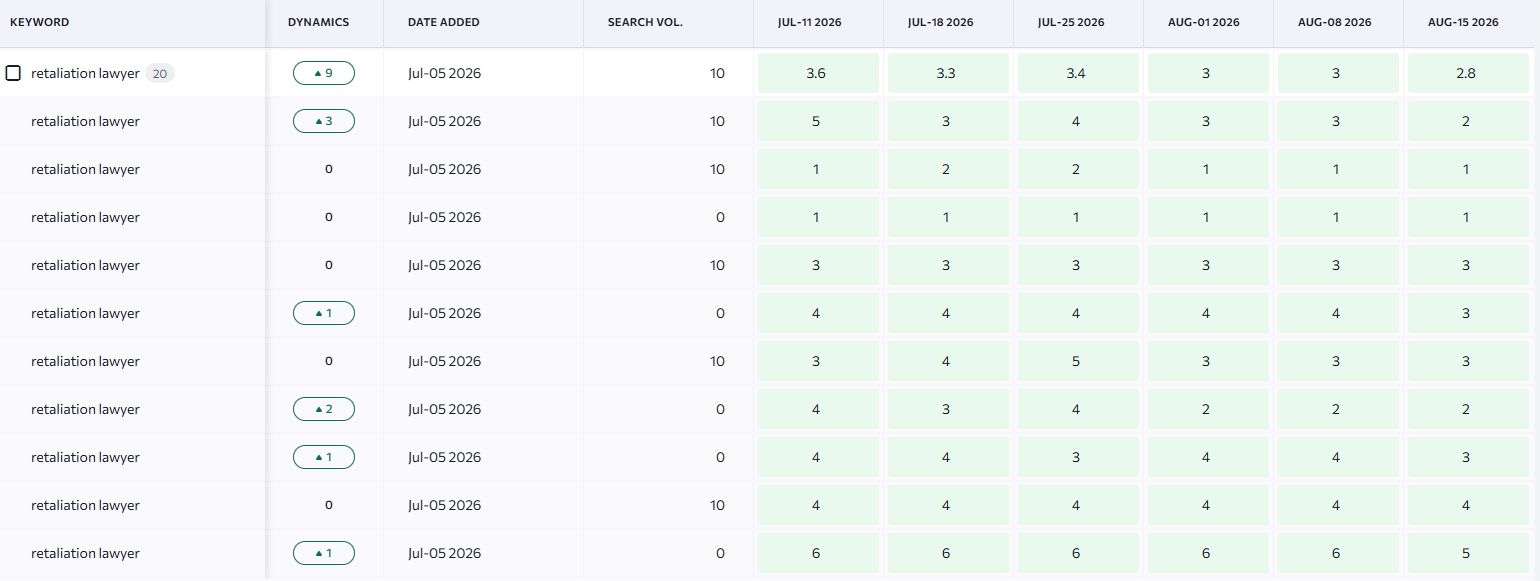
| Retaliation Lawyer | 3.6 | 2.8 | +0.8 |
| Employment Law Attorney | 5.0 | 4.4 | +0.6 |
| Wrongful Termination Lawyer | 3.1 | 2.9 | +0.2 |
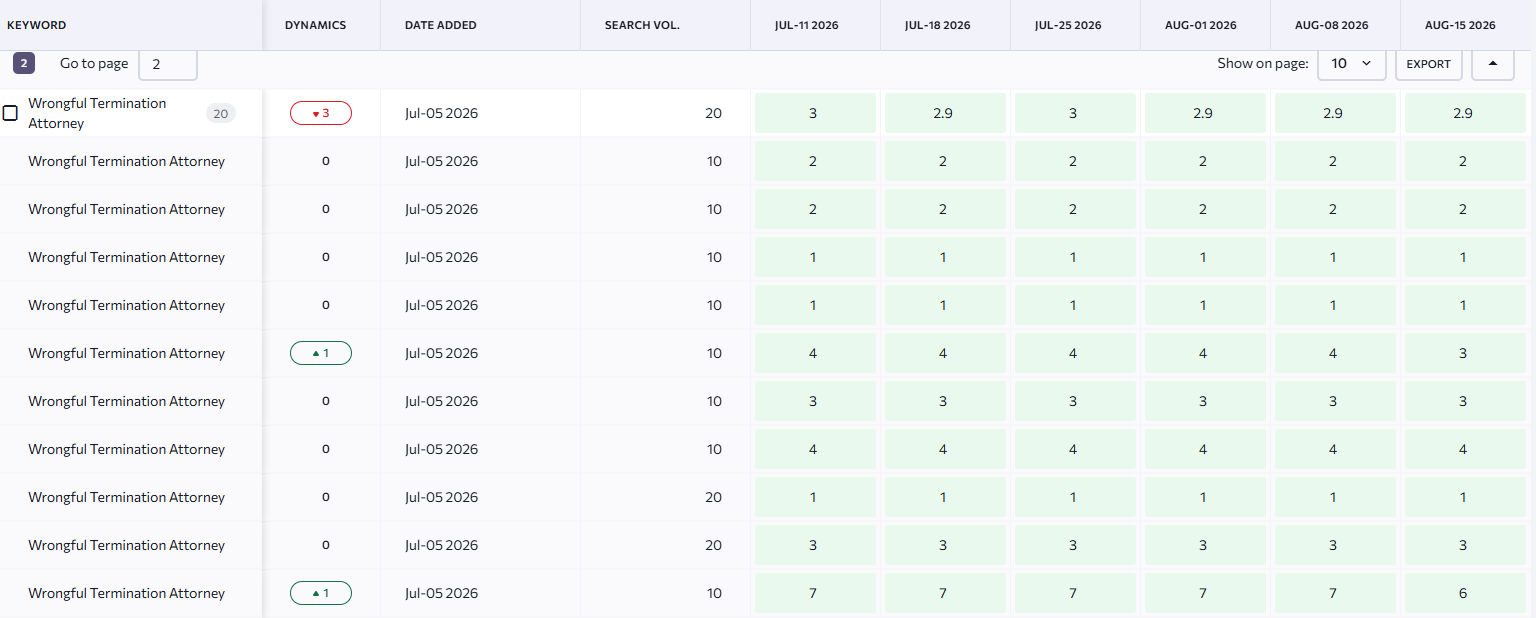
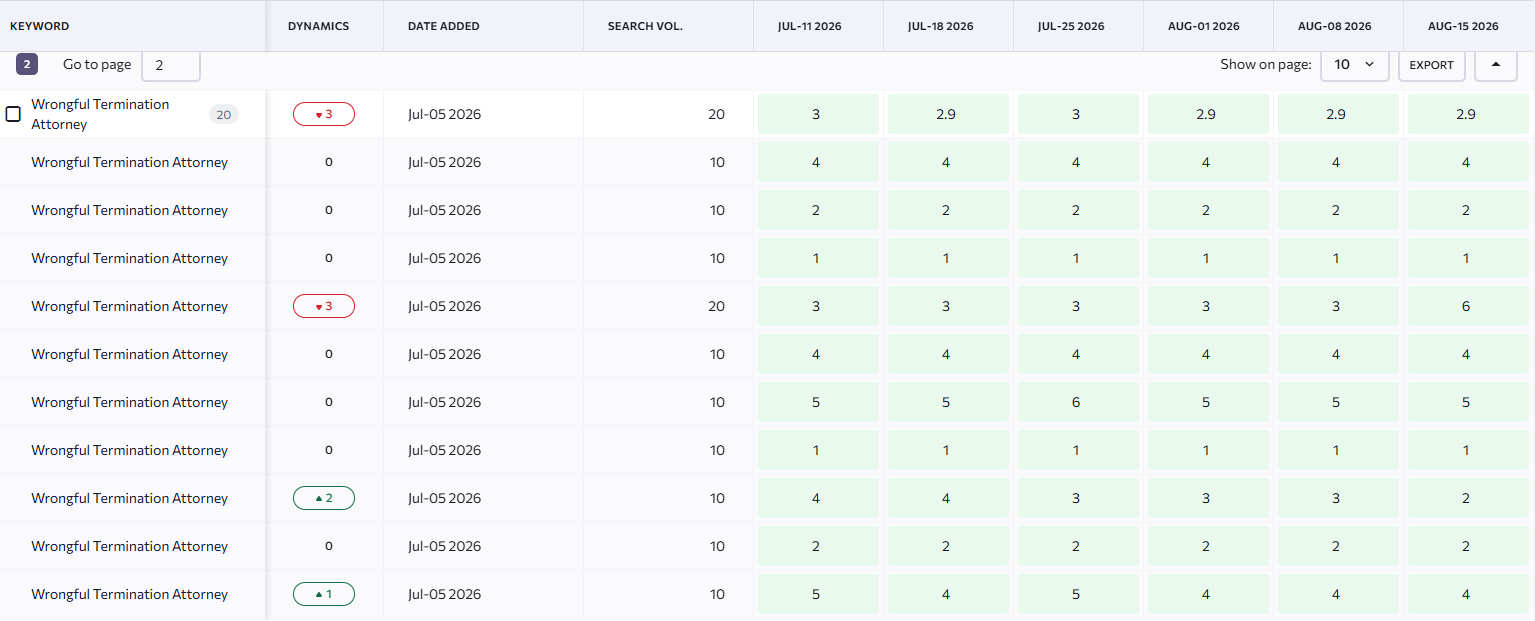
| Wrongful Termination Attorney | 3.0 | 2.9 | +0.1 |
Note: Wrongful Termination terms show only modest numerical movement because they were already ranking around position 3 — among the strongest positions available. The campaign reinforced, rather than needed to build, that visibility.
Keyword-Level Ranking Evidence
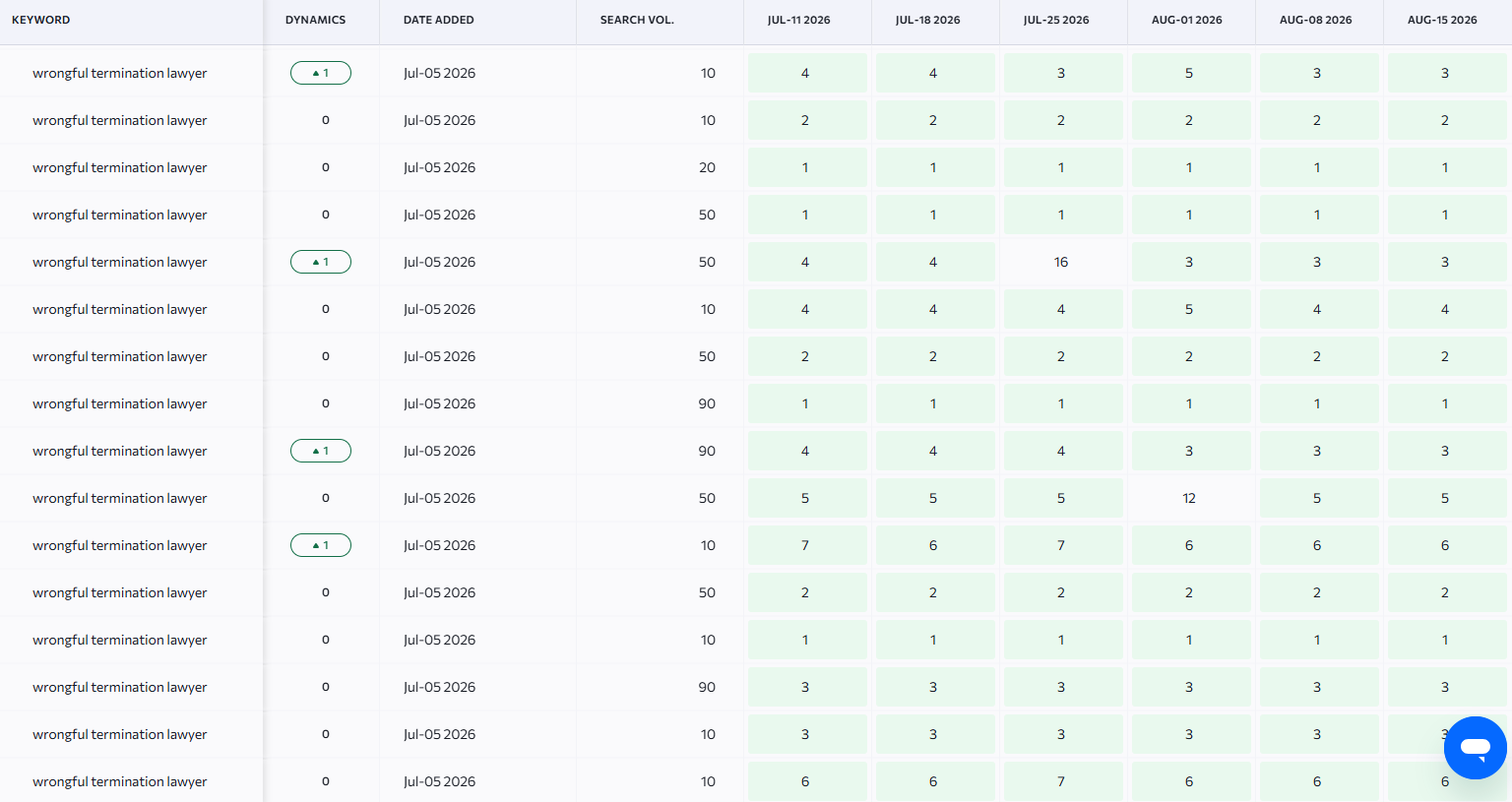
Beyond the aggregate numbers, the underlying rank-tracker screenshots show the improvement extended across every major practice-area keyword cluster — not just one page. Expand any group below to view the source data.Wrongful Termination Lawyer / Attorney
Already a top-performing cluster (position ~3) throughout the tracking window, with several variations holding positions 1–4 consistently — evidence the campaign reinforced strong existing positioning rather than only lifting weaker terms.

Retaliation Lawyer
Improved from approximately 3.6 to 2.8 — moving from the mid-third position into the top-three range, with several related variations holding positions 1–4.
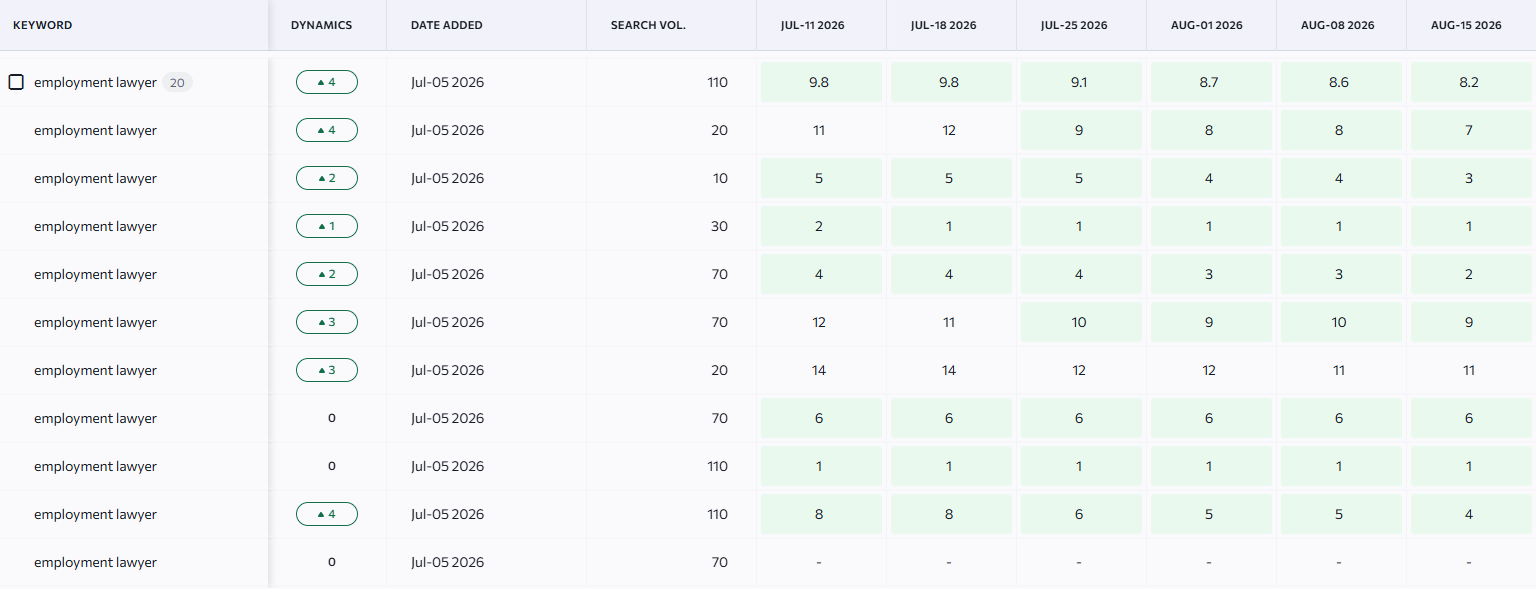
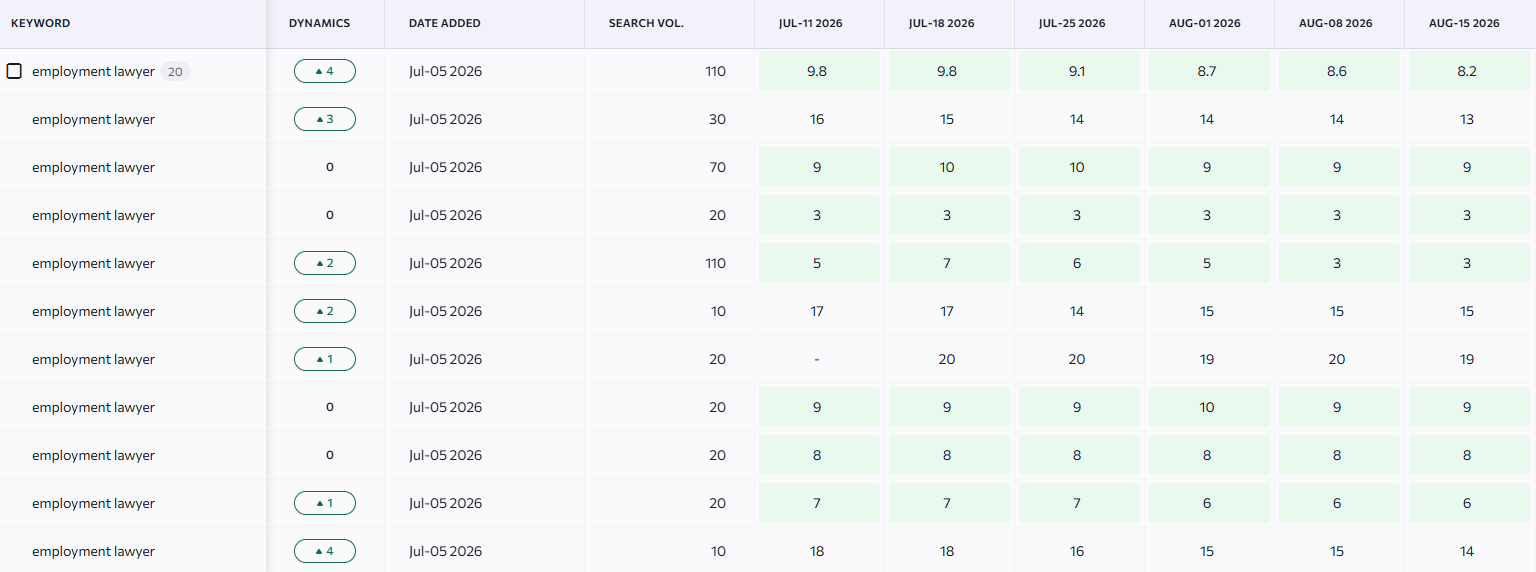
Employment Lawyer
A broad, high-intent search term that improved from approximately 9.8 to 8.2, moving further onto page one, with related variations performing in positions 1–9.
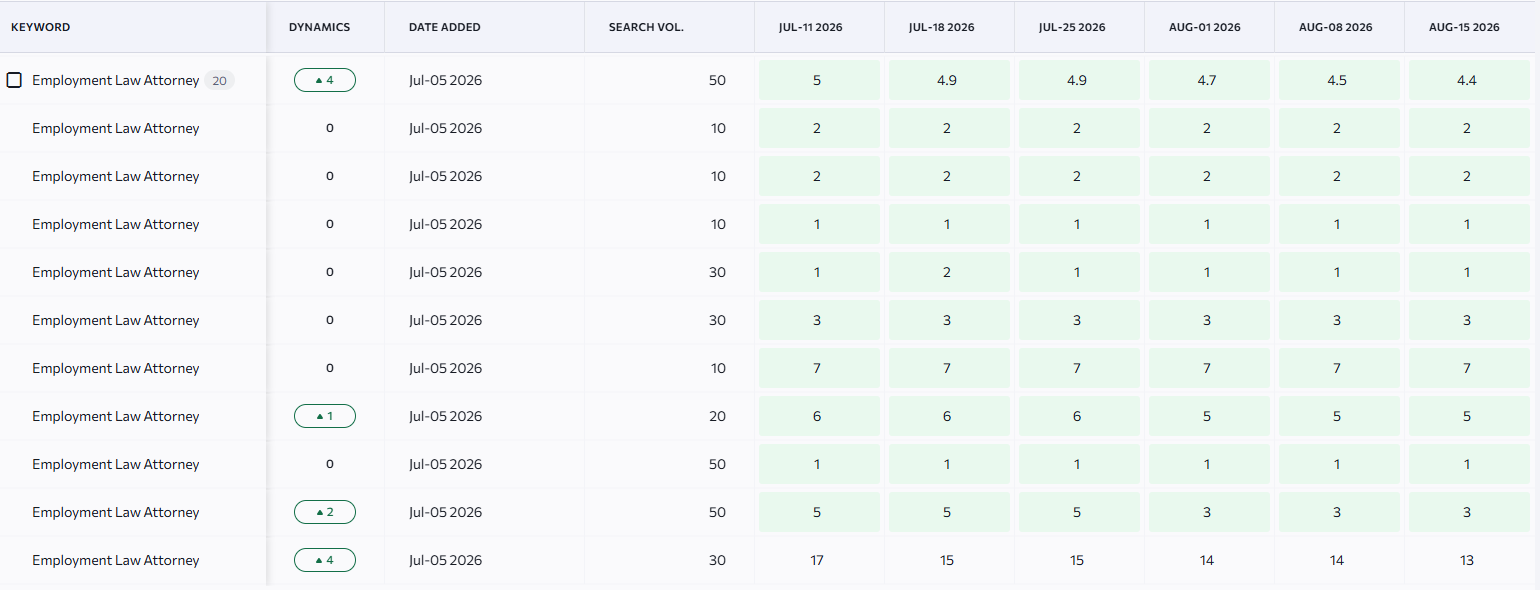
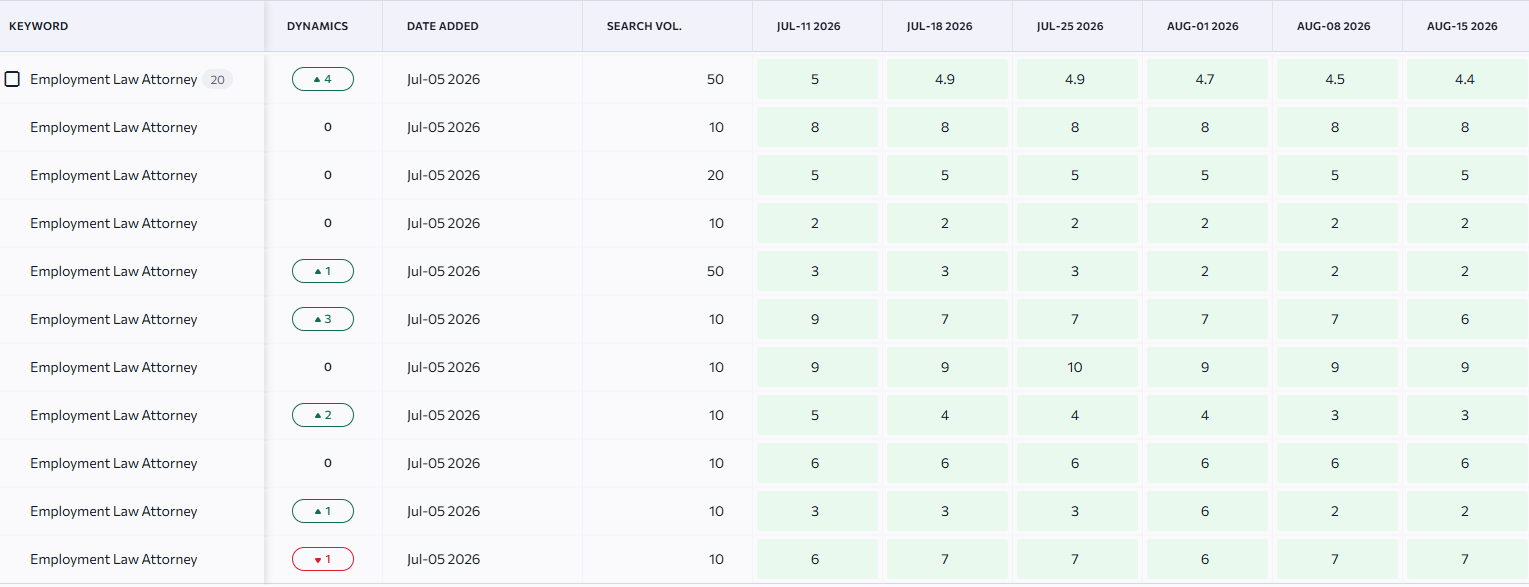
Employment Law Attorney
Improved from approximately 5.0 to 4.4, with several related terms remaining in positions 1–3 throughout — indicating a broader semantic cluster around this phrase, not dependence on one exact match.
Discrimination Lawyer
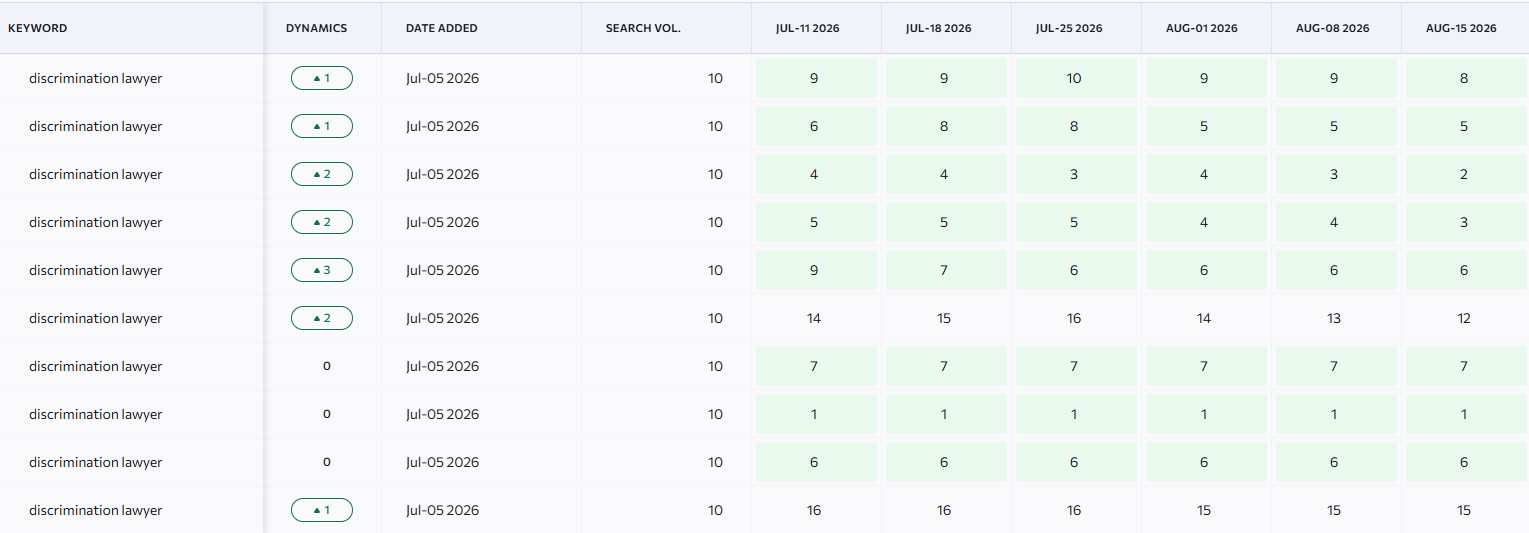
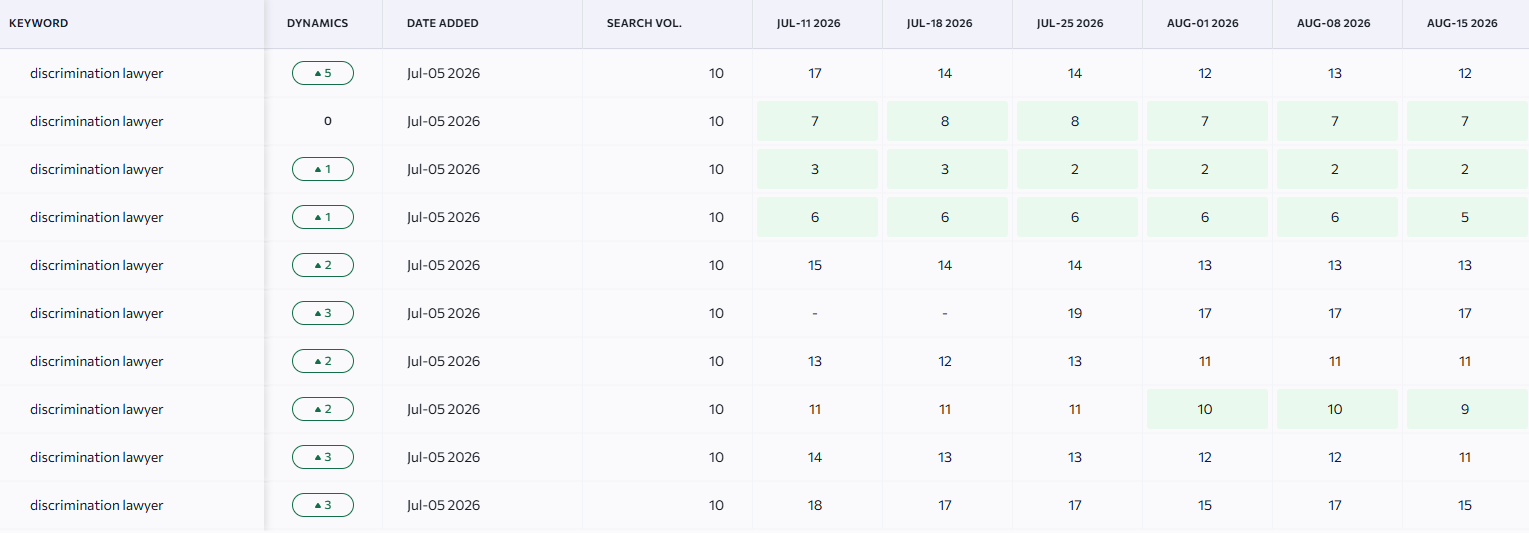
Improved from approximately 10.1 to 8.3 (+1.8), with individual variations moving from 9→8, 6→5, 4→2, 5→3, 9→6, and 16→15.
Employment Discrimination Lawyer
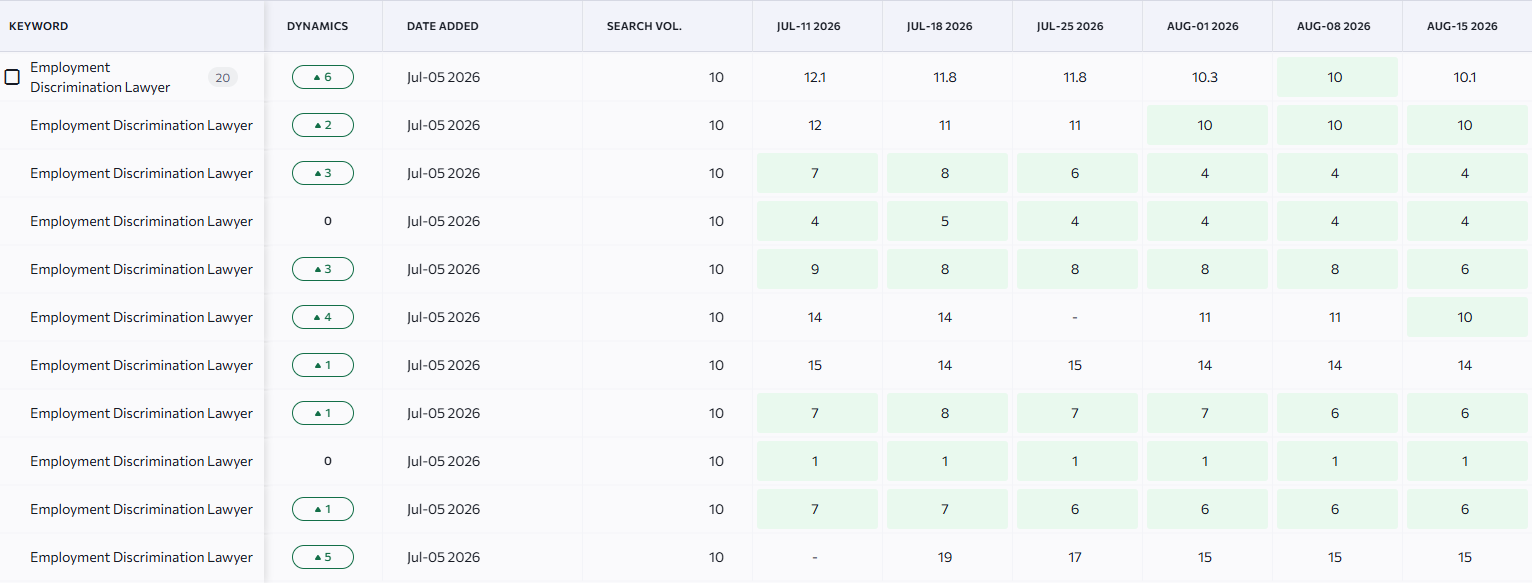
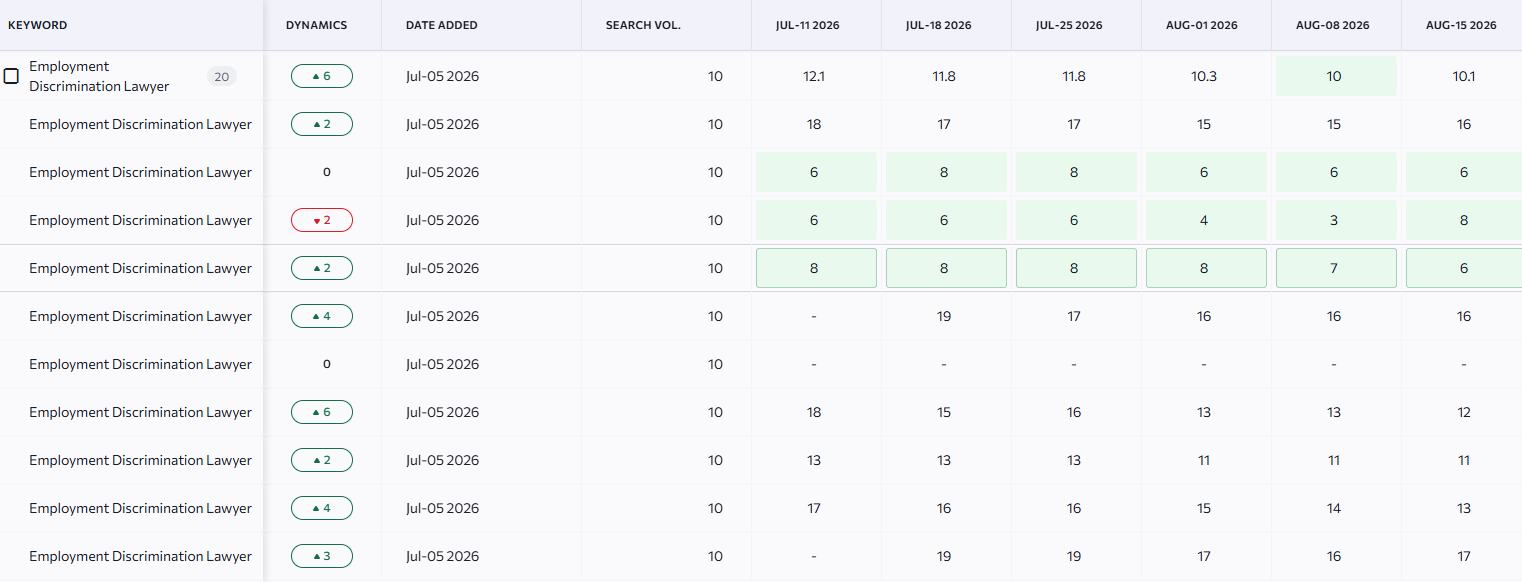
Improved from approximately 12.1 to 10.1 (+2.0), moving from outside the top 10 to just past it. Variations improved from 7→4, 9→6, and 7→6.
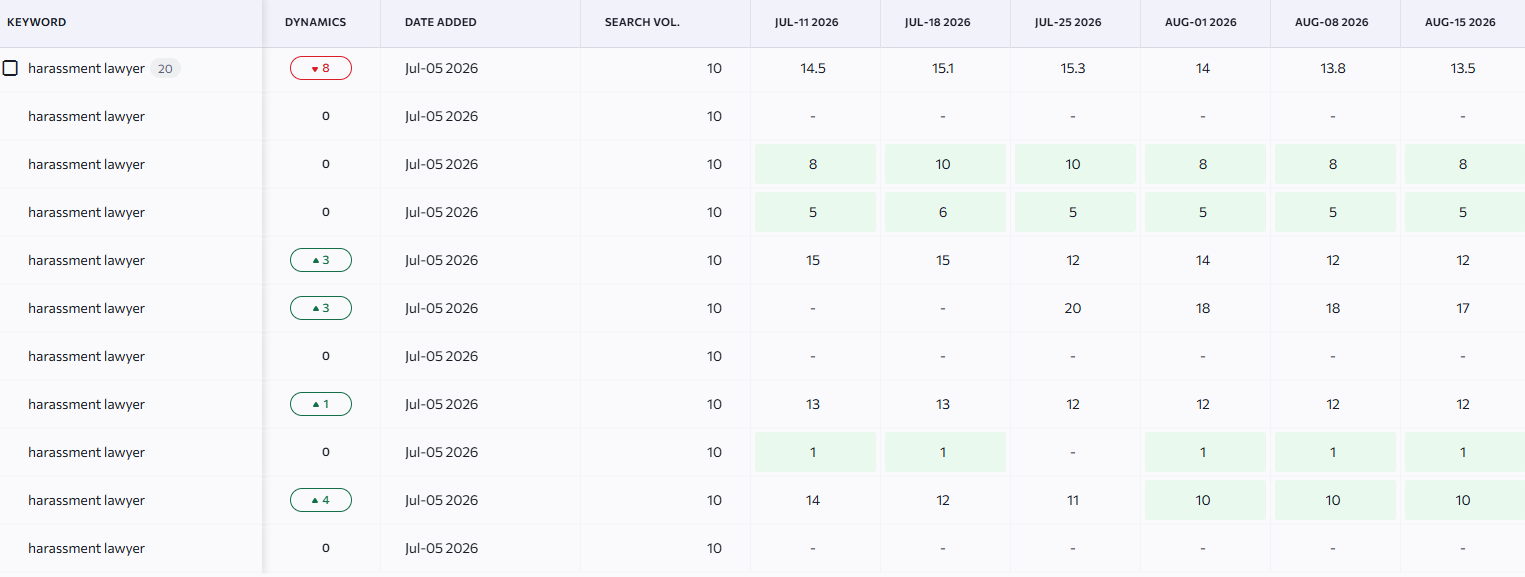
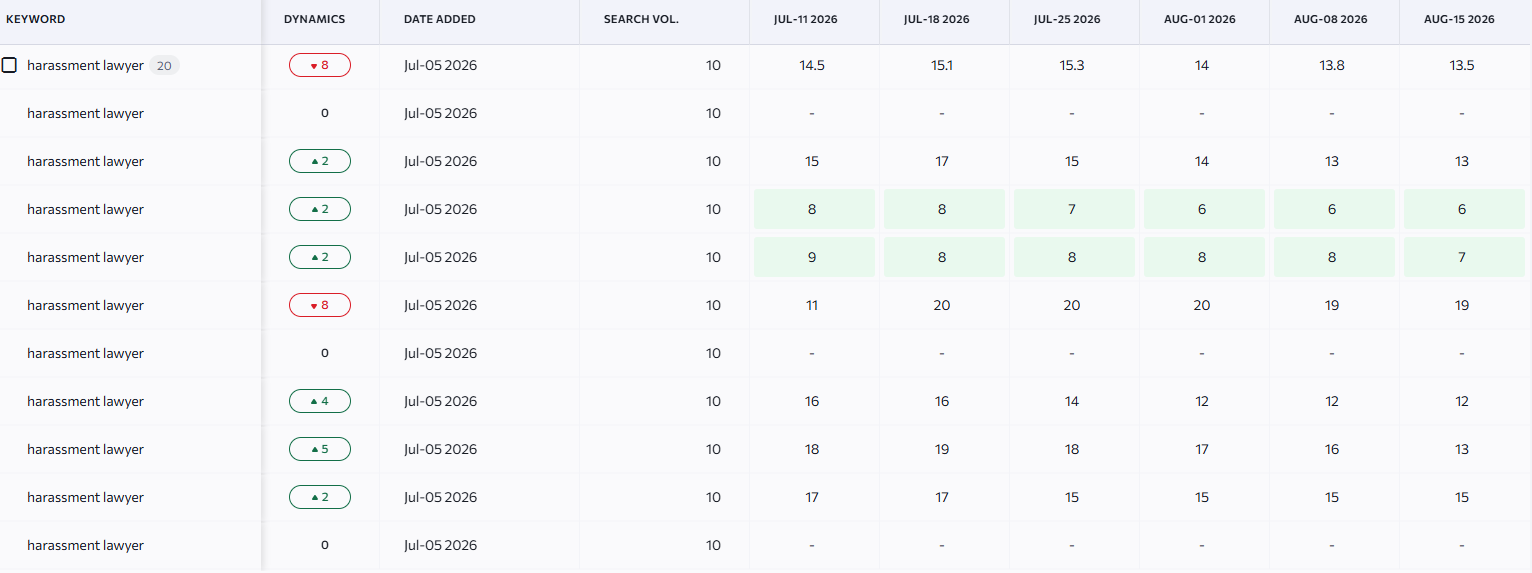
Harassment Lawyer & Workplace Harassment Lawyer
The single strongest cluster in the campaign: Workplace Harassment Lawyer improved from approximately 12.3 to 8.8 (+3.5), moving from outside the top 10 into first-page range, with variations improving from 13→8, 11→7, and 7→2. The broader Harassment Lawyer term improved from 14.5 to 13.5, with variations moving from 18→13 and 16→12.
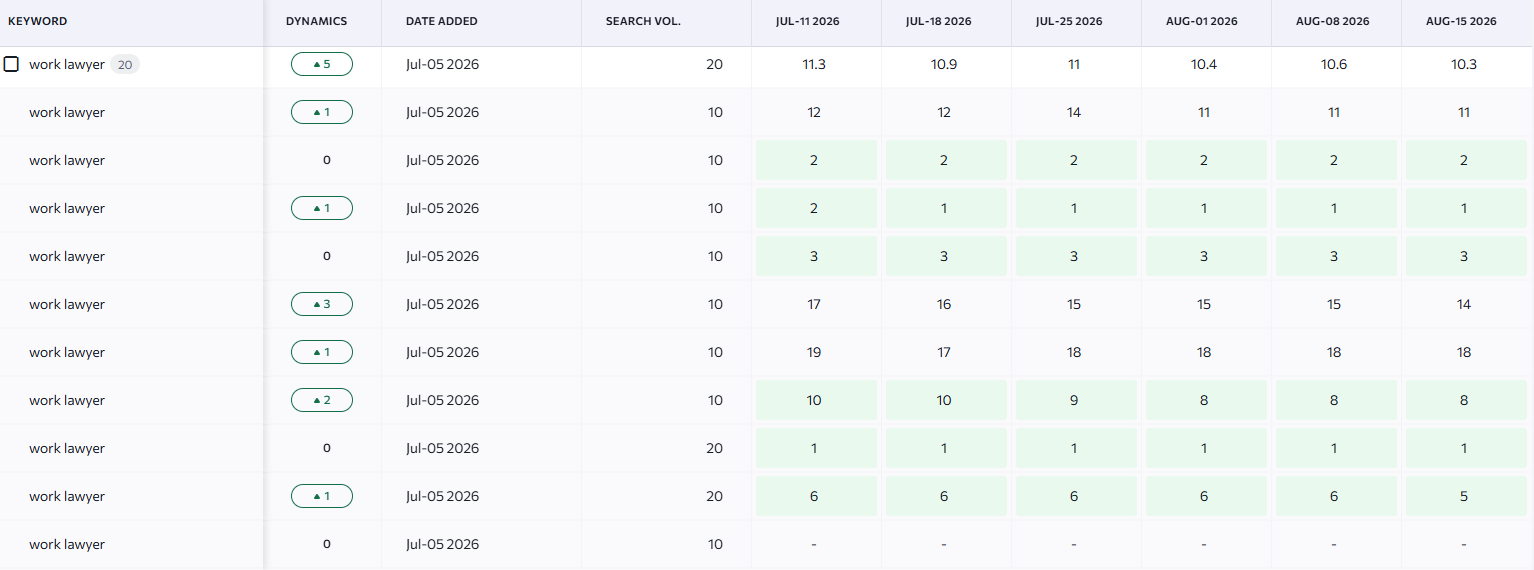
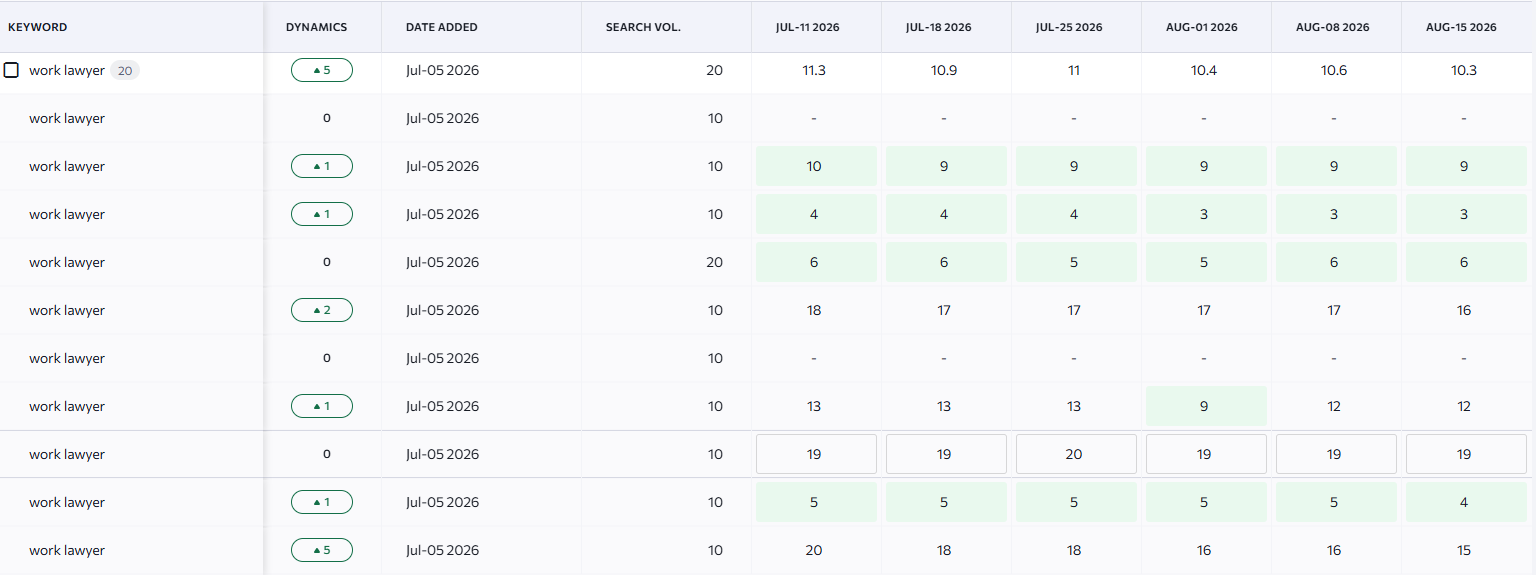
Work Lawyer
Improved from approximately 11.3 to 10.3, remaining near the first-page boundary while related variations held strong positions across 1–10.
Emerging Traffic Channel: AI Assistant Referrals
Following Google's May 13, 2026 integration of a dedicated AI Assistant measurement channel in Google Analytics, the firm's site began recording early discovery metrics from generative engines such as ChatGPT, Gemini, and Claude:
- AI Assistant Visitors: 9 visitors (+50% compared to the previous 28 days)
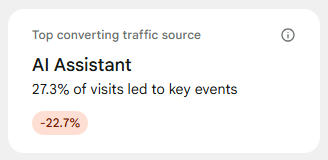
- Key-Event Rate: 27.3% of AI-referred traffic resulted in key site interactions
- Traffic Quality: AI Assistant was identified as the highest-converting traffic source in the displayed analytics snapshot.
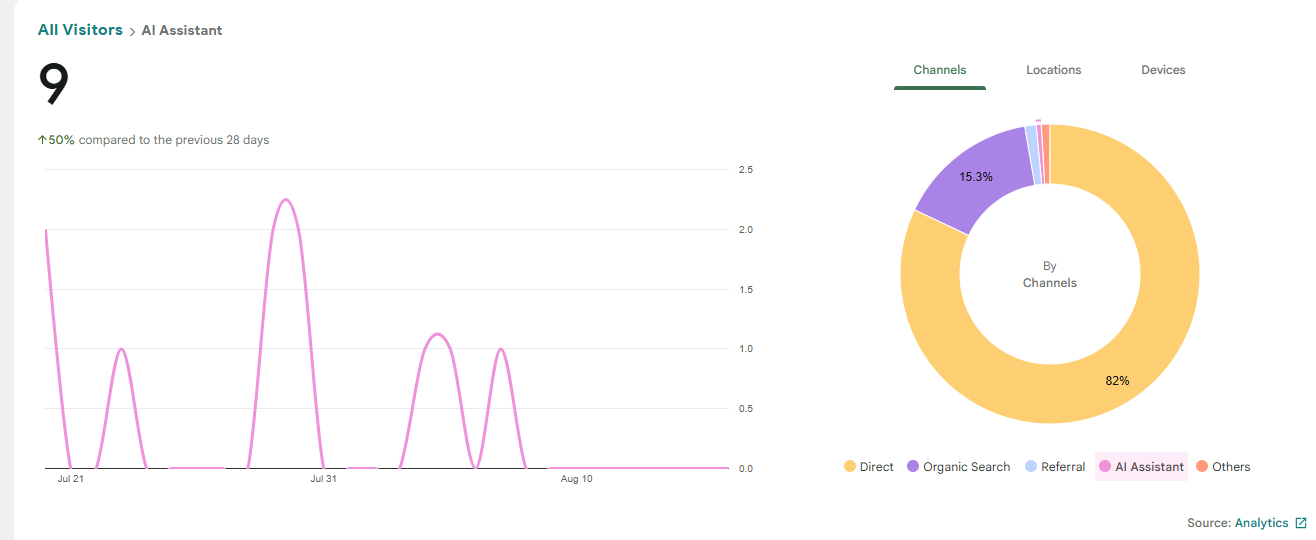
This should be read as an early signal, not a mature channel: nine visitors is too small a sample to establish a reliable long-term conversion benchmark. Because the AI Assistant channel itself is new, its absence from older reports does not mean AI-referred visits weren't happening before — only that they weren't separately measurable. The firm's recommended next step is to track AI Assistant visitors, sessions, key events, and landing pages alongside standard reporting to see whether this pattern holds as volume grows.
The Integrated SEO & Reputation Funnel
Legal services depend heavily on trust. A prospective client searching for an employment lawyer is rarely browsing casually — many are dealing with job loss, retaliation, discrimination, or harassment, and are deciding whether a firm is credible enough to contact. Search visibility gets a firm discovered; reviews help convert that discovery into a call. This case study illustrates how pairing authority-building tactics with local trust signals creates a self-reinforcing acquisition funnel:The client independently reported increased customer contacts during the campaign period — a second, business-side layer of validation alongside the ranking data. Rankings are ultimately a means to an end; the reported increase in contacts is the outcome that matters commercially.
What This Data Does — and Doesn't — Prove
A credible case study distinguishes between observed results and causal claims. The available data supports a strong correlation between the campaign period and improved rankings. It does not establish that the July 15 press release, or the review growth, independently caused every ranking movement. Other factors that can influence local rankings include:- Website changes
- New or updated content
- Technical SEO
- Internal linking
- Google Business Profile activity
- Competitor movements
- Search algorithm changes
- Additional citations or mentions
- Changes in user behavior
- Broader domain authority
- Geographic search variation
The most defensible conclusion: the firm's local search visibility improved significantly during the period in which press release distribution and increased Google review activity were implemented, while the client simultaneously reported increased customer contacts — a stronger and more credible finding than attributing the result to a single tactic.
Next-Phase Recommendations
- Sustain press release publishing: Maintain legitimate, newsworthy announcements — cases, legal developments, attorney insights, community activity — to reinforce broader digital authority, not just for links.
- Systematic review acquisition: Continue an ethical, consistent process for requesting reviews from legitimate clients, aiming for steady growth rather than an artificial spike.
- Target near-top keywords: Prioritize the 33 keywords currently in positions 11–15 and the cluster in positions 4–10 — these are already demonstrating relevance and are the most efficient to push onto page one or into the top three.
- Continue local content development: Build out service-area and practice-area content that reinforces geographic and employment-law relevance.
- Monitor customer contacts directly: Track phone calls, contact-form submissions, consultation requests, Google Business Profile interactions, organic traffic, and branded searches so future campaigns measure revenue-producing activity, not just rankings.
- Add AI Assistant traffic to reporting: Track AI Assistant visitors, sessions, key events, conversion rate, and referral sources going forward to establish a real baseline for AI-assisted discovery.
Ready to Elevate Your Local Search Presence?
Stop relying on a single tactic. Let's build a customized, integrated strategy that combines digital authority, local discoverability, and reputation to drive real client inquiries to your practice.
Schedule a Free Consultation